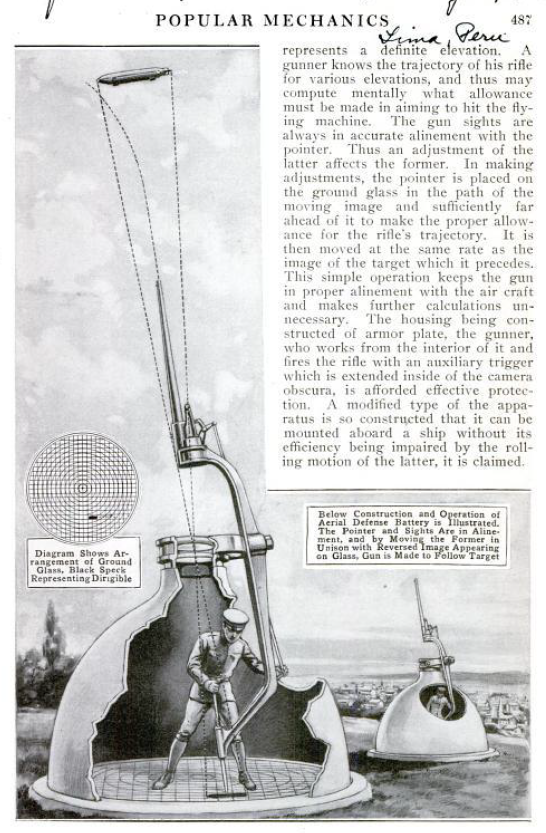
This use of a camera obscura as an anti-aircraft sighting device is attributed to “a Peruvian inventor.” While similar devices were used to simulate bombing runs, this armed variant seems not to have been built (Popular Mechanics, April 1916).
Chakram
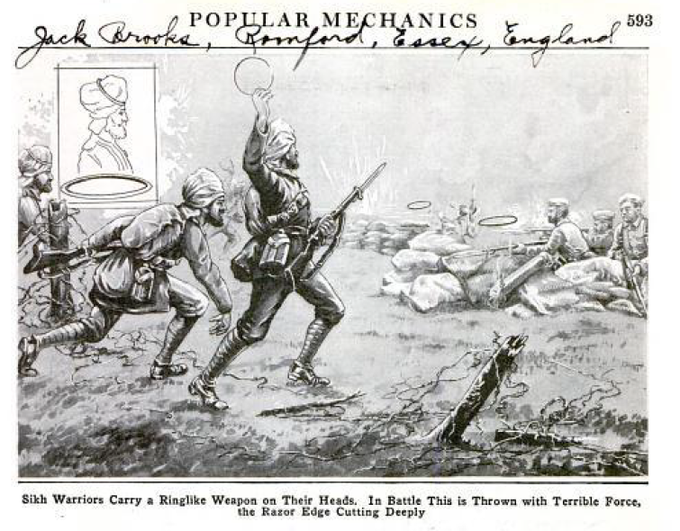
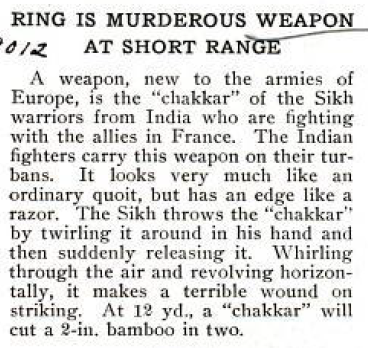
Popular Mechanics (April 1916) is startled by Sikh soldiers’ use of the chakram. This seems to be the most modern account of its use, other than by Xena Warrior Princess.
The chakram hasn’t really developed a wide user base–it’s more of a niche weapon.
Parachute Candidate
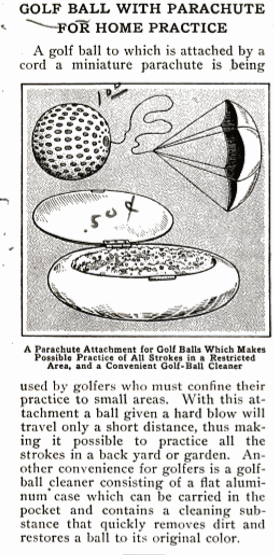
Surprisingly, this idea of a parachute-retarded golf ball–featured here in the June 1916 issue of Popular Mechanics–has popped up a number of times over the years:
Unsafe at Any Speed
While this 1916 “safety airplane” might be considered a forerunner of the V-22 Osprey, its combination of pivoting engine, seat, and wings was wildly unstable (Popular Mechanics, June 1916):
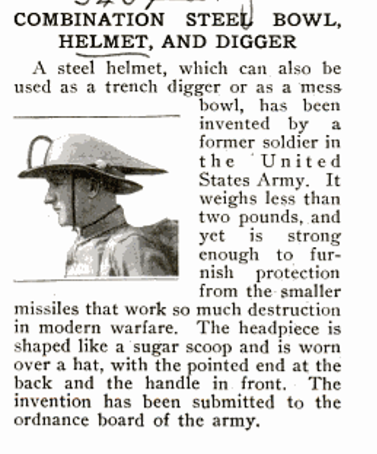
Swiss Army Helmet
The combination shovel, helmet, mess tin: wisely, the Army passed (Popular Mechanics, Feb. 1917).
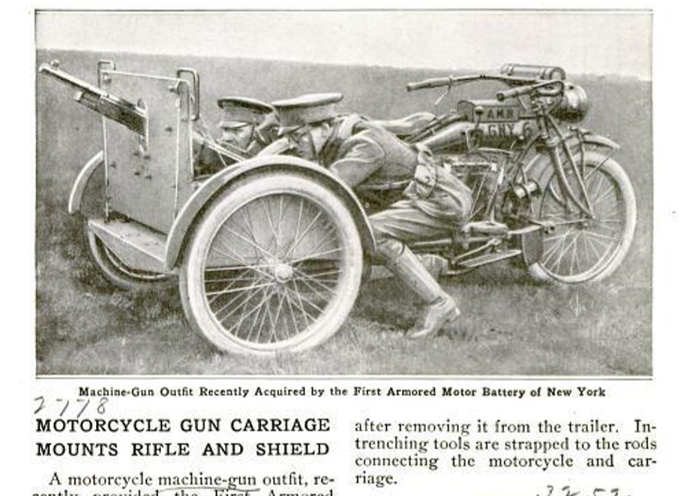
Biker Gear
Although motorcycles with sidecars continued to be developed in most armies right thought WW2, this moto-machine gun emplacement never caught on. Popular Mechanics, Feb. 1917.
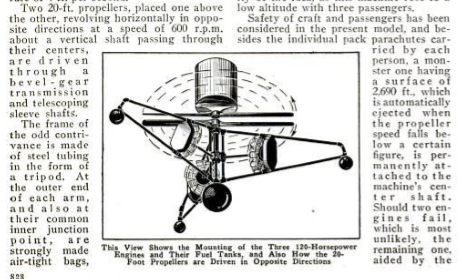
Tethered Helicopter
Austrian Stephan Petroczy built thisĀ helicopter with three 120HP engines and counter-rotating props near the end of WW1; tethered like a balloon, it reached a height of 150 ft. The observers were carried in the drum mounted above the props (Popular Mechanics, June 1921, p. 828).
Auto-Lavabo
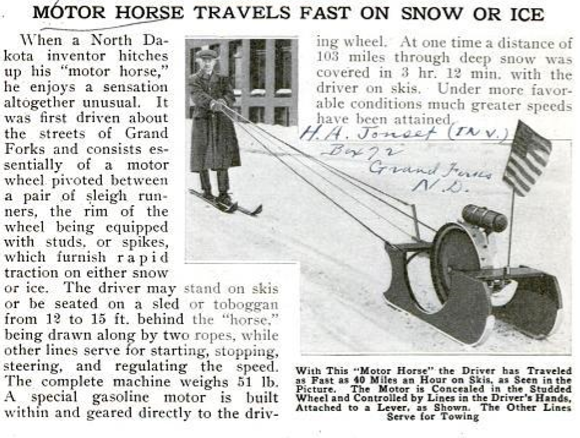
Snow Tow
Hardcore snowmobiling–towed behind a motorized sled with a spiked wheel! (Popular Mechanics, March 1917)
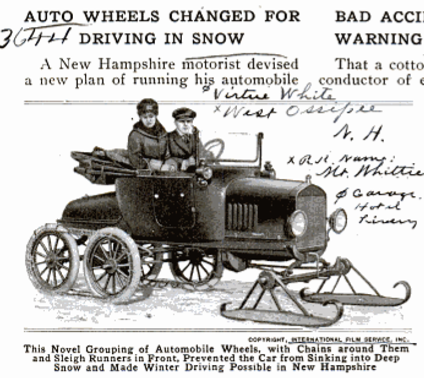
Proto-Snowmobile
This New Hampshire rig has the classic configuration: engine in front supported by skis; tracked rear drive (Popular Mechanics, March 1917):